


Vivian - Find Healthcare Jobs
4.6303.00 Reviews
App Specs
- Version
- 2.1.48
- Updated On
- License
- Free
- Downloads
- 100,000+
- Developer
- Vivian Health
- Categories
- Medical
- Platform
- Android
Screenshots
 Analysis by AppCompare
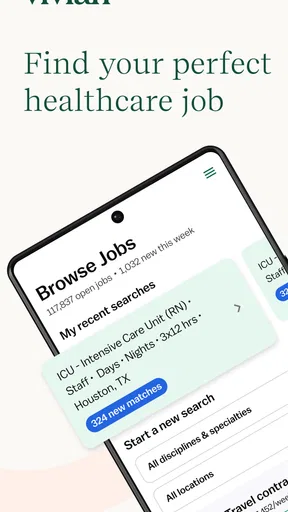
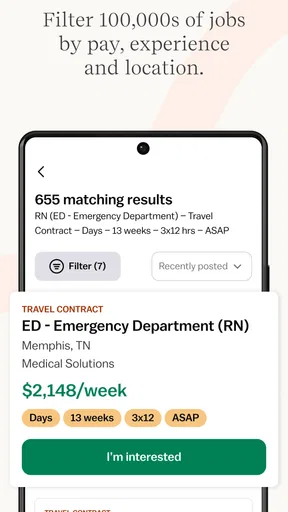
Finding a healthcare job is rarely as simple as typing a title into a search box. The right opening can depend on your license, specialty, preferred shift, location, willingness to travel, and whether you want a permanent role or something more flexible. I tried Vivian - Find Healthcare Jobs with that reality in mind, and my overall impression is that it works best as a focused marketplace for healthcare professionals rather than as a general job board with a medical filter added afterward.
The app comes from Vivian Health, a developer centered on healthcare employment. It is a free medical app for everyone, and it has built a substantial audience: more than two million people use the marketplace, while the Android listing shows over one hundred thousand installs and a 4.6 average from roughly four thousand ratings. Those figures suggest that it is not an experimental side project, but they do not remove the need to judge each listing carefully. A busy marketplace can save time, yet it can also present more choices than a person can sensibly compare.
What using Vivian feels like when you are actually looking
I found the most useful way to approach the app was to treat it as a first-pass discovery tool. Instead of opening it with a vague goal such as “find nursing work,” I would begin with a specific combination of profession, area, and work arrangement. That small change matters. A broad search can produce an overwhelming stream of possibilities, while a focused search gives the app a better chance of showing openings that fit the way I actually want to work.
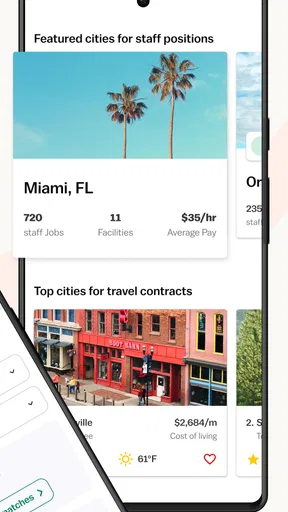
This is especially valuable for people who already know their clinical direction. A registered nurse comparing local hospital roles, a travel professional checking opportunities in another region, or an allied-health worker exploring a change can use the marketplace to see what is available without visiting every employer site individually. I would also find it useful during a quiet planning period, before actively applying, because browsing can reveal which locations and role types appear repeatedly.
The app is less compelling if you are searching for any job at all. General employment platforms often cover more industries, broader career advice, and a wider range of non-clinical roles. Vivian’s narrower focus is its advantage for healthcare workers, but it is also its boundary. Someone looking for administrative work outside healthcare, a completely different profession, or a broad professional networking experience may be better served elsewhere.
Why the healthcare focus changes the search
Healthcare vacancies are not interchangeable. Two posts with similar titles may differ substantially in shift expectations, facility type, specialty requirements, contract structure, or travel demands. A healthcare-specific marketplace makes those distinctions more central to the search than they would be on a typical general job board. In my experience, that makes browsing feel more purposeful, provided I take the time to read the complete posting instead of judging it by the title alone.
That last point is important because a marketplace is not a personal recruiter. It can bring opportunities together, but I still have to decide whether the details fit my license, experience, schedule, and long-term plans. I would never assume that a promising headline answers practical questions about orientation, floating, overtime, housing, renewal, or the exact hiring process. Those are questions for the employer or recruiter, not things I would casually infer from a search result.
Worth Reading Before You Choose

EA SPORTS FC Mobile 26 Is a Bigger Football Game, but It Takes Time

Flipboard Shows What News Apps Must Do Beyond the Feed

Switching to Android Auto Means Rethinking Your Driving Routine

Google Calendar Makes a Crowded Week Easier to Manage

Ludo King Makes the Most of the Minutes Between Plans

Baby Panda World Brings Quick Play to Modern Phones, but Its Game Library Feels Busy
A realistic everyday workflow
Imagine finishing a shift and deciding that your current commute is no longer sustainable. I would open Vivian, set the profession I actually practice, narrow the location to a realistic radius, and separate nearby permanent roles from travel opportunities rather than mixing them together. I would save only the openings that survive a second look, then compare them side by side later when I have enough time to check requirements and contact details.
That workflow prevents a common mistake: applying impulsively to every attractive result. The app can shorten the discovery stage, but it should not replace a personal shortlist. I would keep notes outside the app about license requirements, shift patterns, application deadlines, and questions for the hiring contact. This is one of the less obvious ways to get more value from it: use Vivian to collect possibilities, then use your own checklist to make the decision.
Trust begins with what the app lets you control
Job-search apps handle information that can feel personal even before an application is submitted. A healthcare professional may be thinking about employment history, credentials, contact details, location preferences, and career plans. For that reason, I pay attention not only to how quickly an app finds openings, but also to the moments when it asks me to create an account, complete a profile, or share information with a potential employer.
My cautious approach is simple: I would browse first and provide only the information needed for the next meaningful step. I would read each screen before continuing, especially when moving from viewing a listing to expressing interest or applying. A convenient button can make a process feel automatic, but employment decisions deserve a deliberate pause. The safest workflow is the one where I know what action I am taking before I confirm it.
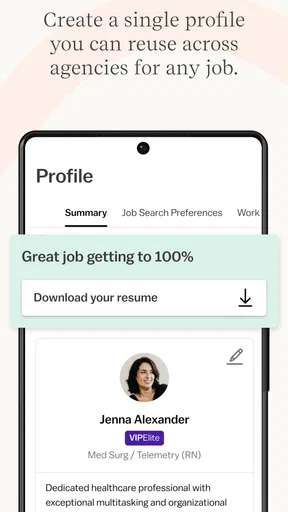
I also prefer to keep my profile accurate but restrained. A complete professional profile may make matching easier, yet there is no reason to add sensitive information merely because a field is available. I would avoid putting unnecessary personal details into free-text areas and would review uploaded documents before sending them anywhere. That is not a criticism unique to Vivian; it is sensible behavior on any employment marketplace.
Account choices and the point where browsing becomes applying
The distinction between browsing and applying is easy to overlook. Looking at a vacancy is one kind of activity. Creating a profile, saving a role, contacting a recruiter, or submitting an application can create a much more direct connection with an employer. I would treat those as separate decisions and check the destination, recipient, and information requested each time.
If I were testing the app for the first time, I would use a dedicated job-search email address and a strong, unique password. I would also review account settings after setup rather than assuming the initial defaults match my preferences. If I stopped searching, I would return to the account and remove or update information that no longer serves a purpose. These habits give me more control than relying on an app to remember my intentions.
There is also a practical reason to keep control of the process: healthcare hiring can involve multiple organizations and different recruiting arrangements. I would not treat every message or request as equally trustworthy simply because it began with a listing found in Vivian. Before sharing documents or financial information, I would verify the employer through an independent channel and confirm that the request makes sense for the stage of the application.
Handling sensitive moments without rushing
The most sensitive part of using a healthcare jobs marketplace is not scrolling through vacancies. It is what happens after I find one that looks attractive. At that point, excitement can make people overlook missing details, unfamiliar contacts, or requests that feel disproportionate to a first conversation. My rule would be to slow down exactly when the opportunity feels most urgent.
I would check the job description for concrete information about the role and compare it with the employer’s own public presence. I would ask who is receiving my application, what happens next, and which documents are genuinely required. I would not send identification, banking details, or other highly sensitive material simply to “hold” an opportunity. If a request feels unusual, I would contact the organization directly using information I found independently.
This cautious approach does not make the app less useful. It clarifies its proper role. Vivian can help me locate and organize opportunities, but I remain responsible for verifying the people and organizations involved before making a serious commitment. That division of responsibility is healthy for any job marketplace, particularly one serving professionals whose credentials and personal information can be valuable targets for misuse.
Where the app saves time, and where it still creates work
The clearest strength is concentration. Instead of repeating the same search across unrelated job boards, I can begin in a healthcare-focused environment and compare roles that are more relevant to my field. That can be a meaningful time saver when I am exploring a new city, considering travel work, or trying to understand the range of opportunities available in my specialty.
The trade-off is that a large marketplace can create its own form of work. I still need to remove unsuitable results, check whether a post matches my actual qualifications, and distinguish a genuinely attractive role from one that merely has a compelling headline. I would not measure success by how many openings I save. I would measure it by whether the shortlist becomes clearer and whether the next action is obvious.
Another limitation is emotional rather than technical: repeated browsing can make a career change feel like an endless comparison exercise. If I already know the facility or employer I want, going directly to that organization may be faster and more straightforward. Vivian is strongest when I need discovery and comparison. It is not automatically the best route when my target is already fixed.
How it compares with ordinary alternatives
Compared with a general job board, Vivian gives healthcare roles a more natural home. The search intent is clearer, and I do not have to wade through unrelated industries. Compared with visiting hospital career pages one by one, it offers a more centralized starting point. Compared with a recruiter relationship, however, it is less personal: the app can surface possibilities, while a recruiter may explain context, advocate for a candidate, or answer nuanced questions about one employer.
I would therefore use it alongside, not necessarily instead of, direct employer research. For a broad market scan, I would start with Vivian. For a known hospital system, I would also inspect the official careers page. For a complicated move involving licensing, relocation, or contract details, I would want direct conversations with qualified representatives before deciding. The best option changes with the stage of the search.
Who will get the most from it
I think the app is a good fit for healthcare professionals who want a focused way to discover openings, compare locations, and keep a career search moving from a phone. It is particularly practical for someone testing the market before making a change, exploring travel possibilities, or trying to understand whether a different region offers suitable work.
It may also help a busy professional who cannot spend an evening checking many separate websites. A short session can produce a starting list, and a later session can be used for closer review. I would recommend it to a friend in that situation, with the reminder that the app begins the research process rather than completing it.
I would be more hesitant to recommend it as the only tool for someone who needs extensive coaching, interview preparation, credential evaluation, or a highly personalized placement service. I would also suggest another route for a person who dislikes creating online profiles or prefers to communicate directly with a known employer from the beginning. Convenience is useful, but it should not outweigh comfort with the level of information sharing involved.
Practical habits that improve the experience
First, I would search narrowly before searching broadly. Start with the exact role and a realistic location, then widen one factor at a time. This makes it easier to understand which change produced new results and prevents an enormous list from hiding the genuinely suitable options.
Second, I would create a simple comparison note for every serious possibility. I would record the employer, location, role type, shift information, application route, and questions that remain unanswered. This is more reliable than trusting memory after viewing many similar postings.
Third, I would separate “interesting” from “ready to apply.” An interesting listing deserves a closer read. A ready-to-apply listing has passed a basic check of qualifications, location, schedule, and employer identity. That two-stage process reduces rushed applications and makes the app feel more like a research assistant than an endless feed.
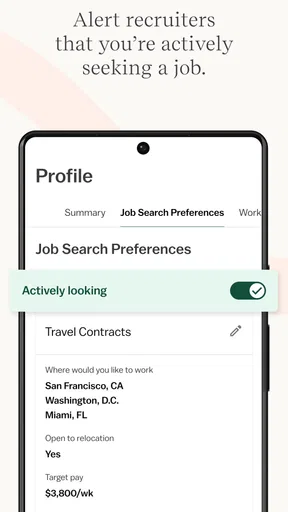
Finally, I would review my account periodically. If my location, specialty, availability, or job-search status changes, outdated information can make future interactions less useful. I would also revisit any communication preferences and remove information I no longer want associated with an active search. These small checks reinforce user agency without requiring complicated routines.
Compatibility and everyday practicality
The Android version is currently listed as 2.1.48 and supports Android 7.0 or newer, which keeps it accessible to people using older compatible devices. The app is free, and its Everyone age classification makes it broadly available from an age-rating perspective. Those details make it easy to try without treating installation as a major commitment.
I would still judge it by the quality of the search experience on my own phone and by how manageable the results feel. A free app can be worthwhile even when I use it only during a job transition, but I would not install it expecting the app alone to guarantee a position. Its value comes from reducing the effort of finding relevant possibilities and helping me decide which ones deserve further investigation.
My cautious verdict after using it
Vivian - Find Healthcare Jobs earns my recommendation as a specialized starting point for healthcare employment searches. Its focused marketplace is more useful than a generic board when I need clinically relevant opportunities, and its scale means I can begin with a broad view before narrowing to realistic choices. The 4.6 average and established user base support the impression that many people find the service worthwhile, though neither should replace my own judgment about a particular listing.
My praise comes with a clear condition: I would use it deliberately. I would browse before building a detailed profile, read every transition from search to application, keep sensitive information to a minimum, and verify employers independently before sharing important documents. I would also maintain a shortlist outside the app so that convenience does not turn into passive scrolling.
For a healthcare worker who wants discovery, comparison, and a mobile-first way to explore the market, it is a sensible free tool. For someone seeking guaranteed placement, intensive career counseling, or a direct relationship with one known employer, another option may fit better. In my view, the app is most trustworthy when I treat it as a useful doorway—not as the final authority on a job, an employer, or the decision to apply.
Pros
- Search healthcare vacancies by role
- location
- specialty
- and schedule.
- Useful for discovering temporary
- per diem
- and travel healthcare assignments.
- Job details can help compare pay
- requirements
- and contract conditions.
- A focused platform for nurses and other licensed healthcare professionals.
- Mobile access makes it convenient to browse opportunities while away from a computer.
Cons
- Many listings may require active licenses
- certifications
- or prior experience.
- Available jobs and pay rates can vary considerably by location and specialty.
- Some opportunities may involve demanding shifts
- travel
- or short-notice placements.
- You may need to complete extra screening steps before applying for certain roles.
- The app may be less useful for students or non-clinical healthcare job seekers.
FAQs for Vivian - Find Healthcare Jobs
What is Vivian - Find Healthcare Jobs?
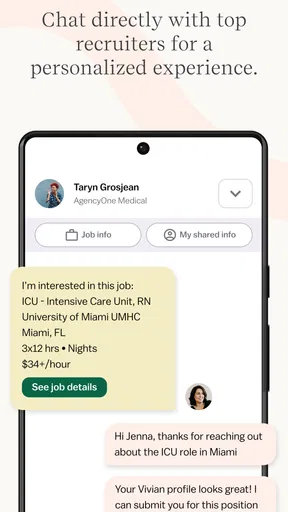
Vivian - Find Healthcare Jobs is a mobile job-search platform designed for healthcare professionals. It brings together opportunities for nurses, allied health workers, physicians, therapists, technicians, and other medical specialists. After creating a profile, users can browse positions, compare job details, review pay information when available, and connect with recruiters or staffing agencies directly through the app.
Who can use Vivian to search for healthcare jobs?
The app is mainly intended for healthcare professionals looking for permanent employment, travel assignments, per diem work, local contracts, or other flexible opportunities. Nurses are particularly well represented, but the platform also includes jobs for allied health professionals, physicians, advanced practice providers, and support roles. Available listings depend on location, specialty, credentials, and current employer demand.
Can I apply for jobs directly through Vivian?
Vivian allows users to explore job listings and begin the application or recruiter-contact process from within the platform. Depending on the employer, an application may be completed in the app or may redirect you to an external recruiting system. Before applying, review the facility, assignment length, pay package, licensing requirements, shift expectations, and any agency-specific conditions carefully.
Does Vivian show salary, benefits, and contract information?
Many listings provide useful details such as estimated pay, weekly compensation, shift type, employment category, assignment duration, location, and possible benefits. However, the amount of information can vary between employers and job types, and displayed compensation may depend on qualifications or contract terms. Treat the listing as an initial estimate and confirm the complete package with the recruiter.
Is Vivian free to download and use?
Vivian is generally free for healthcare professionals to download and use for searching jobs, creating a profile, saving opportunities, and communicating with recruiters. Some features or application steps may take place on third-party employer platforms, whose policies can differ. Users should also protect personal information, verify recruiter identities, and avoid paying fees simply to access legitimate job opportunities.


